We run towards the fire.
We've spent our lives responding when things happen. Between us we've done so in software companies large and small, data centres, on power grids, at festivals, in first aid tents, and nuclear reactors on submarines.
We founded Albúinn to share the most important lessons we've picked up along the way, and train technical people in responding to incidents with confidence.
Our most important lesson is true no matter the domain: incident response is about people first and foremost. How they think, make decisions, and work together.

Bill Ward
Founder · LinkedIn →
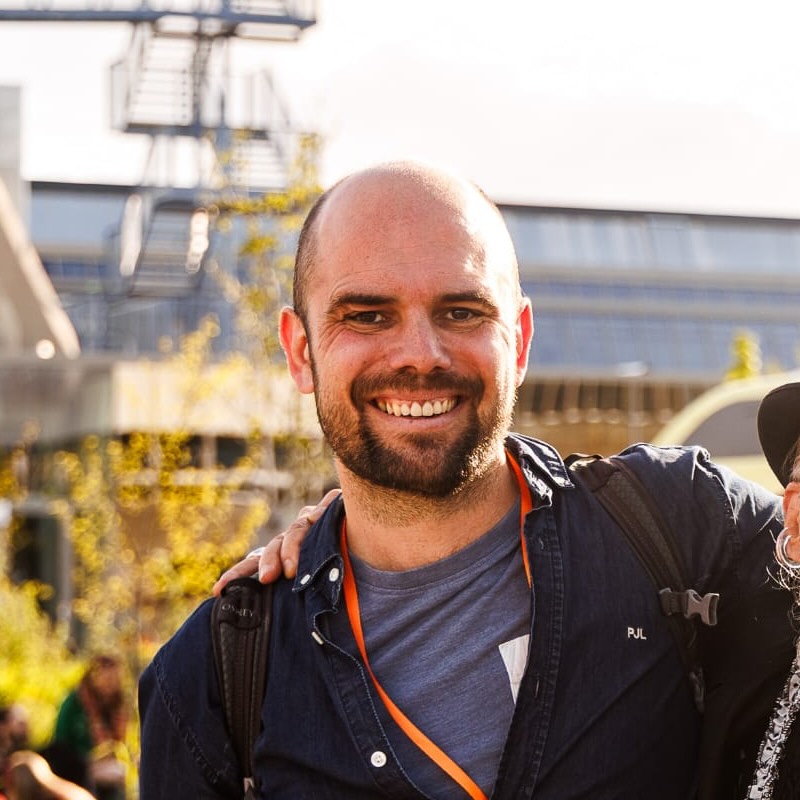
Chris Olsen
Founder · LinkedIn →
We build resilient teams.
You know the person. When everything's gone wrong, everyone looks to them.
They're great to have around, but they can't always be there. They're a single point of failure, and heroes also need to take time off.
We create teams of heroes. People who feel ready and willing to deal with incidents of any size, who make good decisions under pressure, and work well together.
To get you started, we hold regular workshops that teach fundamentals of incident response. Bring yourself and your team, spend two hours with us, and leave with skills you can use the same day.
To build a team that is ready for anything, our main offering is a multi-day training, adapted to your needs. We can also provide post-incident support, readiness assessments, or ongoing advice and coaching.
Our prime directive
Incident response is about people
Good incident response requires a team that is confident, communicates well, has practiced their roles, and can make decisions and work together under pressure.
Our training is technology agnostic. Across all the domains we've worked in, the skills we train are always fundamental. It doesn't matter if it's a wildfire or a data centre.
There are certainly tools out there that help respond to and mitigate incidents. But organisations are often too focused on having the tools, documentation, and certifications in order — and forget that when push comes to shove, someone has to be there to make decisions.
People are rarely formally trained in the structure, processes, and adaptive mindset crucial for incident response. When the stakes are high, responders don't rise to the occasion, they fall to the level of their training.
Incident response mastery relies on a simple principle: the higher the operational risk, the higher the ratio of preparation to execution. You wouldn't expect your team to respond to a fire in your building without firefighter training — your team deserves the same preparation when responding to incidents.
Not being ready has real cost
ITIC says 90% of companies in their survey, where half of respondents were SMEs, estimate their costs of downtime at minimum $300k per hour.
Oxford Economics puts the same number at a cool million for companies in the Global 2000.
IBM puts the average cost of a data breach at $5 million.
Whatever the risks and numbers for your organisation, incidents get expensive, fast. They also cost more than money — they cost trust, reputation, and contribute to low morale and employee churn.
How do these "soft skills" help?
We hear you: training has monetary cost and takes the team away from their regular work. What makes this a good investment?
Incidents become less severe. A confident team that functions and communicates smoothly will resolve incidents faster, minimise their impact, and learn from them. Shorter, milder, and less frequent incidents translates into real bottom line impact.
You gain a framework for continuous training. Routinely handling minor incidents with the right framework serves as continuous practice to build operational intuition, muscle memory, and organisational trust for the time it really matters.
Incident response skills transfer.
Experience doesn't just improve incidents. The skills we
train are valuable across the board, and the blend of active
response and formal training elevates a team into a
well-functioning unit.
We train how to use what we call strike teams — using the incident response
framework to solve hairy engineering problems.
Lastly, it's a morale booster. We have fun with our training, and give people tools to become more confident, better communicators, and better problem solvers.
Our two-hour workshop
Introduction to incident response.
Learn the fundamentals of incident response, both theory and practice. The workshop is divided into three main sections.
Respond. Organising for an incident. Roles and decision making frameworks. Communicate up, down, out.
Prepare. "Plans are worthless, but planning is everything." Find out why.
Clean up. Never let an incident go to waste. Learn from failure with blameless post-mortems.
No experience needed. You'll leave with skills you have seen in action and can use the same day.
We run these foundation workshops remotely at regular times, at no cost. Get in touch if you need a different schedule, an in-person workshop, or want more detail.
Our services
Multi-day training — Workshops and exercises over several days, shaped to your environment.
Readiness assessment — Where does your team stand today? We find the gaps and give you a clear picture of what to fix first.
Post-incident support — Something broke and you want to learn from it properly. We facilitate the post-mortem and help you follow through.
Advisory/consulting — Coaching and fractional work for leaders building resilient organisations. Someone experienced in your corner.
Get in touch
Book a workshop, ask about the our services, or take some time to talk about how to make your organisation more resilient.
Schedule a call Send us an email
We're excited to hear from you.